The Rind

Don’t miss a payment: A simple guide to multi-payment options on Zest
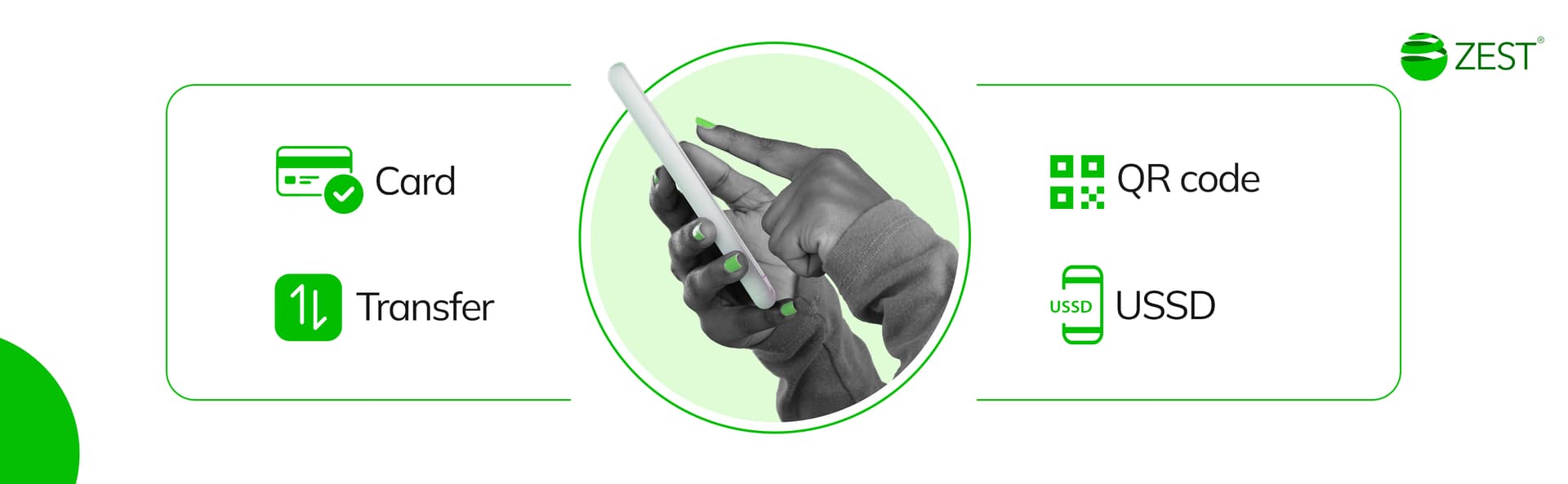
As a business owner, every sale counts, and so does every way your customer wants to pay. That’s where payment rails come in. A payment rail is simply the route or channel through which a payment travels from your customer to your account.
While many are familiar with card payments, multiple payment rails, such as USSD, QR codes, and virtual accounts, are becoming increasingly important, especially in a mobile-first economy like Nigeria. These methods offer flexibility, wider customer reach, and in many cases, more reliability.
Zest supports these rails. This guide is designed to help you understand how they work, why they matter, and how you can use them to maximise every payment opportunity.
Zest offers several non-card payment methods. They allow your customers to complete transactions without needing a debit or credit card.
They differ from traditional card-based payments because:
They often do not require physical infrastructure like a card terminal.
They are usually faster and more accessible for a wider range of customers.
They allow customers to use bank transfers, USSD codes or QR scans instead of cards.
In a country like Nigeria, where many people are unbanked and do not have cards, and where smartphone usage varies, alternative payment rails help you meet your customers where they are, using the tools they already have.
USSD (Unstructured Supplementary Service Data) is a text-based banking method that works on any mobile phone.
It does not require internet access, making it ideal for customers who do not have smartphones or reliable connectivity.
The customer selects “Transfer” at checkout (either online or on the POS).
Zest provides a bank account number that the customer can send the payment to.
The customer dials their bank’s USSD code on their mobile phone and initiates the transfer to the provided account number.
Reaches more customers, including those without smartphones or cards
Works reliably in areas with low or no internet connectivity
Ideal for customers who are banked but do not have cards
Display USSD instructions at checkout and on your POS interface
Educate your staff so they can assist customers when needed
Explain the steps to first-time users at the point of payment
Reassure customers that their payment reflects on your dashboard in real time
QR (Quick Response) code payments allow customers to scan a code using their bank app, wallet app, or payment-enabled camera. It’s a contactless way to pay that’s fast and easy.
At checkout or on your POS, Zest automatically generates a QR code for the transaction.
The customer scans the code using their preferred app.
Once scanned, they confirm the payment, and it reflects on your dashboard.
Provides a seamless and contactless payment experience
Perfect for retail and walk-in settings where speed matters
Makes people more likely to buy quickly because it’s easy to use.
Make sure the QR code is visible at the payment point
Train staff to mention QR as a quick option, especially for customers using smartphones
Regularly test QR compatibility with popular bank apps and wallets used by your customers
Virtual accounts are unique bank account numbers used to receive payments. These accounts function just like regular bank transfers for the customer, but with added benefits for you.
Static virtual account: One account number assigned to your business and reused for multiple payments.
Dynamic virtual account: A one-time account number automatically generated for each transaction. It expires after use.
Static accounts can be activated from your Zest merchant dashboard. You can share this number with customers for recurring payments.
Dynamic accounts are automatically created at checkout (either via API or POS) whenever a customer chooses the "transfer" option. These accounts are single-use and expire shortly after the transaction window closes.
Helps you match each payment to its specific transaction
Reduces the chance of payment errors
Offers customers a familiar way to pay via bank transfer
Payments reflect in real time on your dashboard, so you know when funds have been received
Use dynamic virtual accounts to simplify tracking for one-time transactions
Share static virtual accounts with trusted customers or for repeated business payments
Remind customers to include payment references when prompted, especially for static transfers
Let customers know that expired dynamic accounts will not accept payments
You can read more about getting started with Virtual accounts here.
Using more than one payment option is not just smart, it's strategic. Here’s why merchants should take full advantage of Zest’s alternative rails:
Unlock more sales opportunities from different types of customers, especially those without cards or smartphones
Reduce reliance on card networks and avoid missed payments during downtimes
Improve the customer experience by offering payment choices that suit individual preferences
Gain better cash flow visibility as payments reflect instantly on your merchant dashboard
To make the most of these payment rails, ensure your customers know they are available:
Promote all payment options, both in-store and online
Use signage, receipts, and direct conversations to educate customers
Train your staff to explain each method and guide customers through the process
Monitor usage in your Merchant Dashboard and adjust your setup or messaging when needed
Zest's other payment rails like USSD, QR code, and Virtual Accounts, are simple, secure, and powerful. They help you accept payments from more people, in more places, and in more ways. Whether your customers prefer dialling a USSD code, scanning a QR, or making a quick bank transfer, Zest gives you the flexibility to meet them where they are.
Log in Go to your Zest dashboard to activate and use all available payment options today. The more rails you offer, the more payments you can capture. Don’t miss out.
Was this article helpful?
Thank you for your Feedback!